Permitting is the step in every construction project that tends to catch people off guard. The design is done, the contractor is lined up — and then the calendar question arrives: how long until the county approves the plans? Here's an honest answer, along with the factors that actually control the timeline.
Why there's no single number
The Tampa Bay region spans multiple counties and dozens of separate building departments. Hillsborough County (including the City of Tampa), Pinellas County (St. Petersburg, Clearwater, Largo), Pasco County (Wesley Chapel, New Port Richey), and the surrounding counties all run independent review processes with their own staffing levels and current backlogs. A straightforward addition that clears in two weeks in one jurisdiction might take six in another — not because the plans are different, but because the departments are. Local experience matters here more than people expect.
The stages of a residential permit
For a new home, an addition, or a significant remodel, the typical path moves through these stages:
- Pre-application and zoning check. Before plans are submitted, the project has to be confirmed as allowable on your lot — correct zoning classification, required setbacks, maximum lot coverage, and flood zone. A good designer handles this during the design phase so nothing surprises you at submission.
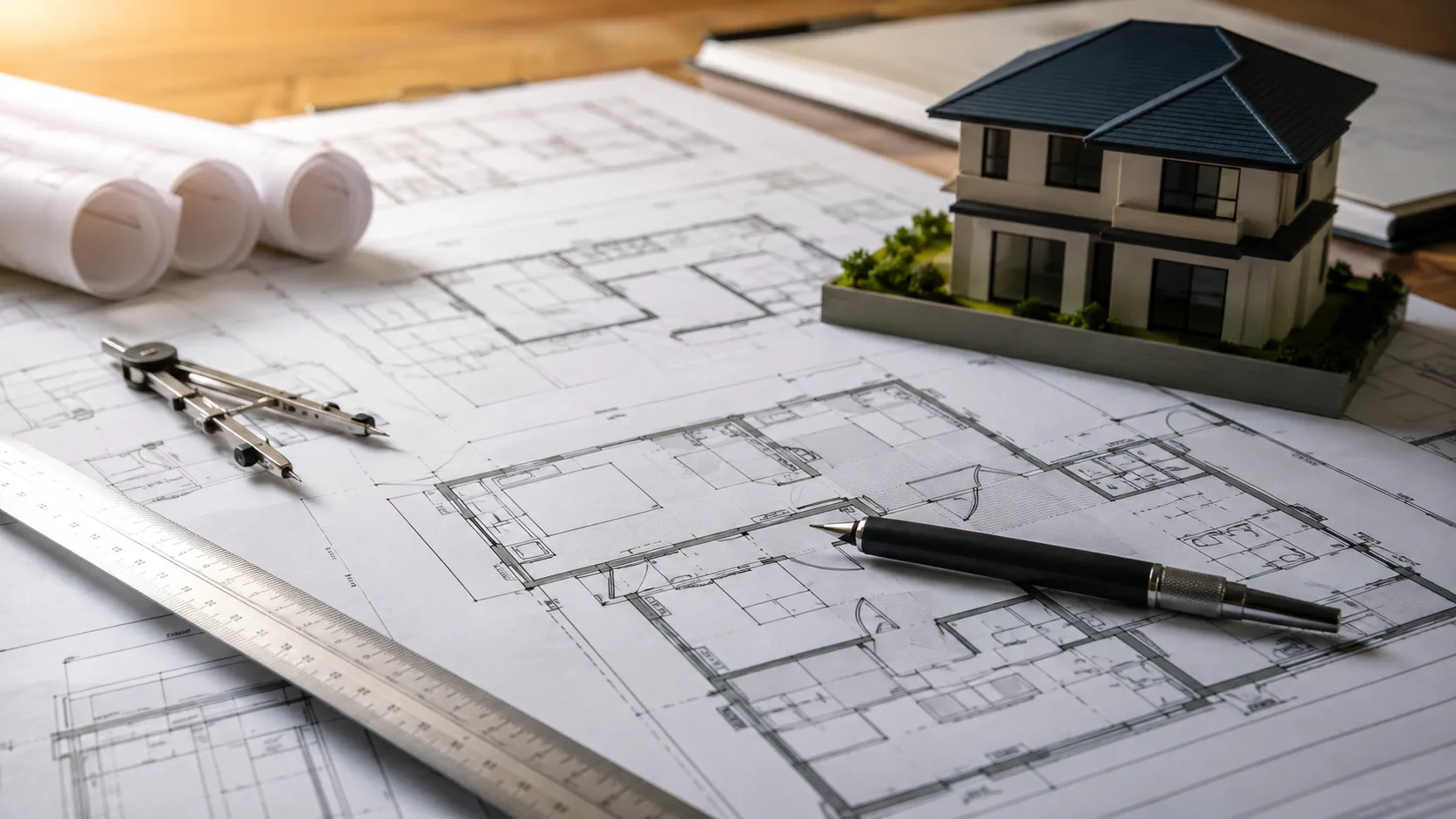
- Plan submission. Most Tampa Bay jurisdictions now accept electronic submissions, which has simplified this step considerably. Your full permit-ready set — floor plans, elevations, structural layouts, energy calculations, and engineering documents — goes in together.
- Plan review. The building department routes your documents to reviewers covering separate disciplines: structural, electrical, plumbing, mechanical, and sometimes a zoning reviewer. Each works through your plans independently and either approves or issues comments.
- Correction cycle. If reviewers find issues — missing details, code questions, inconsistencies between sheets — they issue a correction letter. Your designer addresses each item and re-submits. Plans that clear on first review move much faster than those that require two or three correction cycles.
- Permit issuance. Once all reviewers sign off, the permit is issued and construction can begin.
What actually controls the timeline
Department workloads shift with the construction market and staffing levels, so we won't quote specific turnaround windows that might be outdated by the time you read this. What stays consistent are the factors that lengthen or shorten the process:
- Plan completeness. The single biggest factor. A thorough, well-coordinated set that anticipates reviewers' questions clears faster than one that leaves things open to interpretation. This is especially true for projects that need to satisfy Florida's wind-load and flood-zone requirements.
- Correction cycles. Each round of revisions adds full queue time — not just a few days. A project that clears on first submission can reach permit issuance in a fraction of the time of one that requires multiple rounds.
- Project complexity. New construction involves more simultaneous reviewers than a simple addition. Multi-story homes, complex rooflines, or structural changes to load-bearing elements require more engineering detail and more coordination.
- Jurisdiction and current backlog. Some departments publish live plan review queue times online. Checking your county's portal before you submit gives you a realistic baseline.
The best thing you can do to speed permitting is invest in solid plans upfront. Correction cycles are where timelines slip — and they're almost entirely preventable.
How to move through permitting faster
- Don't skip the as-built. For additions and remodels, a thorough as-built drawing of your existing home means the new design ties in correctly from the start. That means fewer questions from reviewers and fewer correction cycles.
- Coordinate engineering before you submit. Plans submitted without required structural engineer stamps will wait until those documents arrive. Getting engineering done as part of the design process — not after — eliminates one of the most common delays.
- Use a designer who knows your jurisdiction. Each county's reviewers have their own priorities and recurring comment areas. A designer who regularly submits plans in your county knows what to prepare for. We've been submitting permit-ready documents across the Tampa Bay Area since 1986.
What about expedited review?
Some Tampa Bay jurisdictions offer expedited or over-the-counter review options for simple projects. If you're working with a straightforward scope and a tight schedule, it's worth asking your designer — or calling the building department directly — whether your project qualifies. Not every county offers this, and eligibility criteria vary, but it's always worth checking.
Permitting moves fastest when it starts with the right documents. Learn more about our permit-ready drafting and construction document services, or schedule a free consultation to talk through your project timeline. We've been helping Tampa Bay families navigate the building permit process since 1986 — and our goal is always to get you to construction as smoothly as possible.