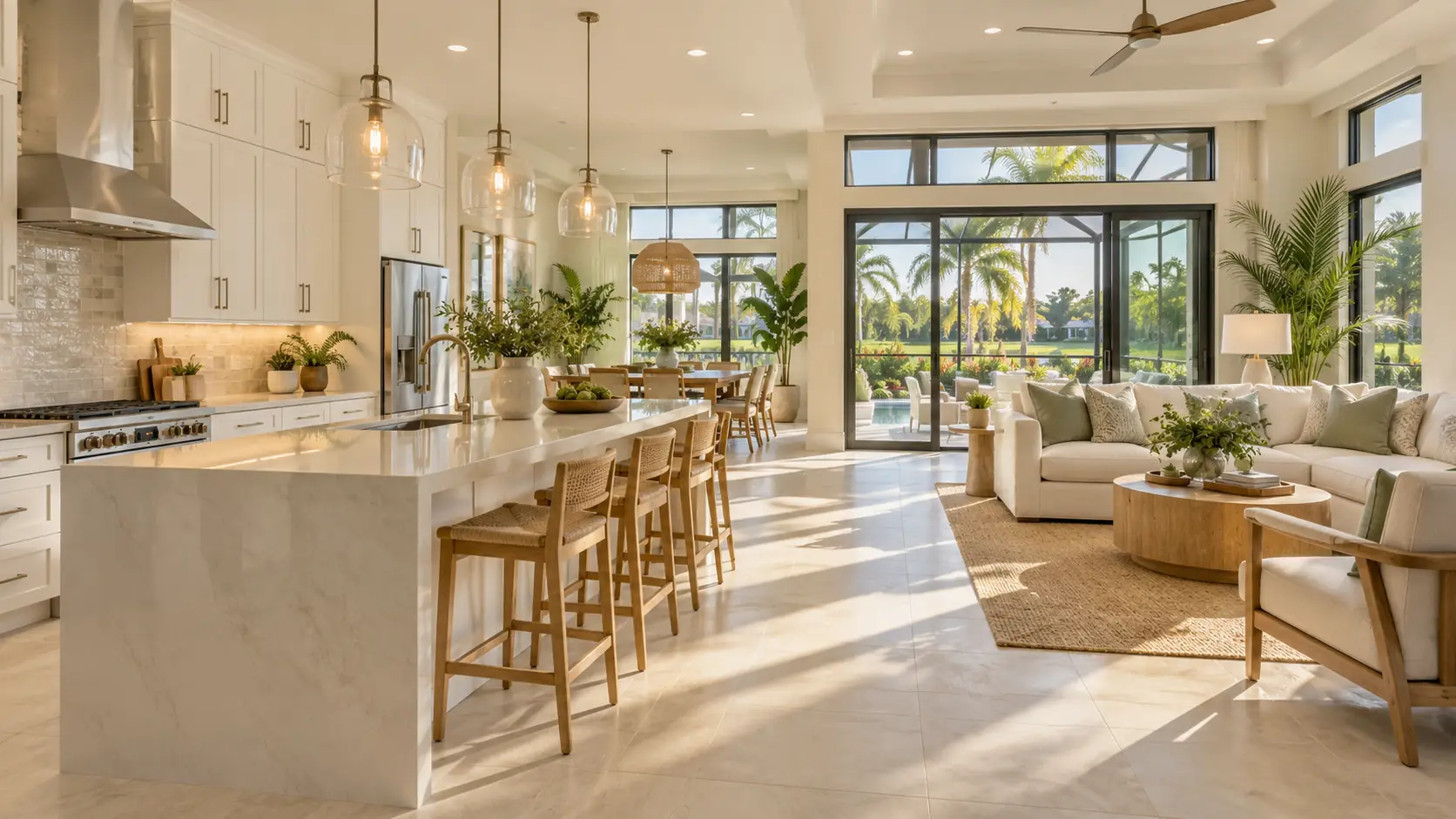
Florida's climate is genuinely hard on building materials. High UV, persistent humidity, salt air within miles of the coast, daily summer rainfall, and periodic major storms create conditions that degrade materials that perform fine elsewhere in the country. Choosing finishes and materials that hold up well in Tampa Bay isn't about spending more — it's about spending on the right things at each stage of the project.
Here's a practical guide to the material and finish decisions that matter most in Florida residential construction and remodeling.
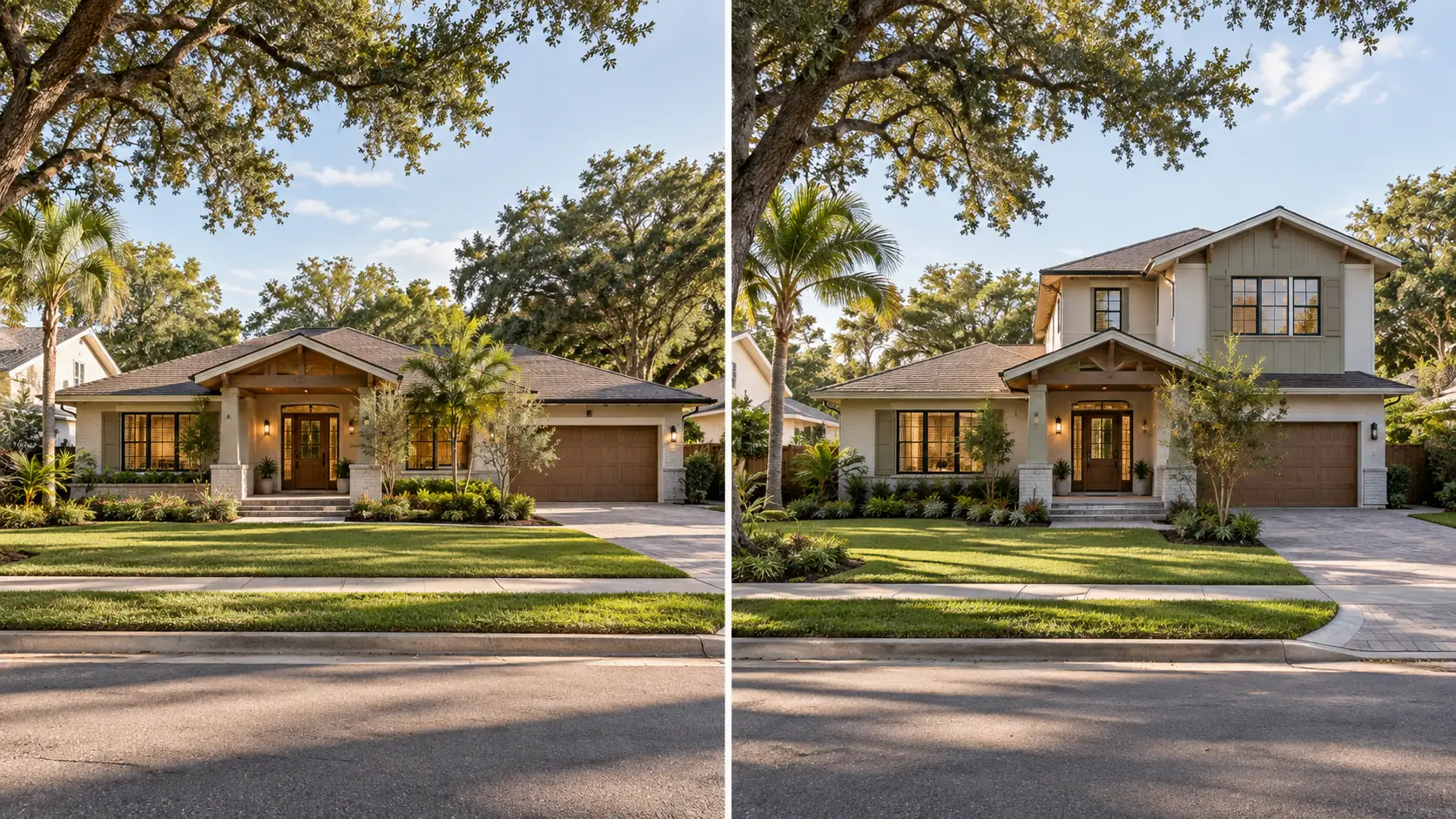
Exterior finishes: stucco vs. fiber cement
Stucco is the default exterior finish in Tampa Bay for good reason. It's vapor-permeable, durable in Florida's heat and humidity, and holds up to wind-driven rain when properly applied and maintained. The critical detail is maintenance: stucco should be painted and sealed on a regular cycle — typically every five to ten years depending on exposure — to prevent moisture infiltration through micro-cracks. Unpainted or poorly sealed stucco can allow water behind the finish coat, leading to mold and substrate damage that's far more expensive to repair than routine upkeep.
Fiber cement siding (James Hardie is the dominant brand in this market) is a popular alternative that performs well in Florida's humidity, holds paint significantly longer than wood-based products, and can eliminate the recurring maintenance cycle associated with stucco. It's also rated for Florida's design wind speeds when installed with the correct fastening system. Solid wood siding — while visually appealing — requires substantially more care in Florida's environment and is rarely the practical long-term choice on a home that faces constant UV and moisture.
Roofing materials
Tampa Bay homeowners typically choose among concrete tile, clay tile, and metal roofing. All three can perform well; the choice involves trade-offs in cost, structural load, and longevity.
- Concrete tile is the most common in the region, offering durability and solid wind resistance when installed with the correct fastening system. It's heavier than the alternatives, so the structure needs to be designed to carry it — something addressed in the structural documents during the design phase.
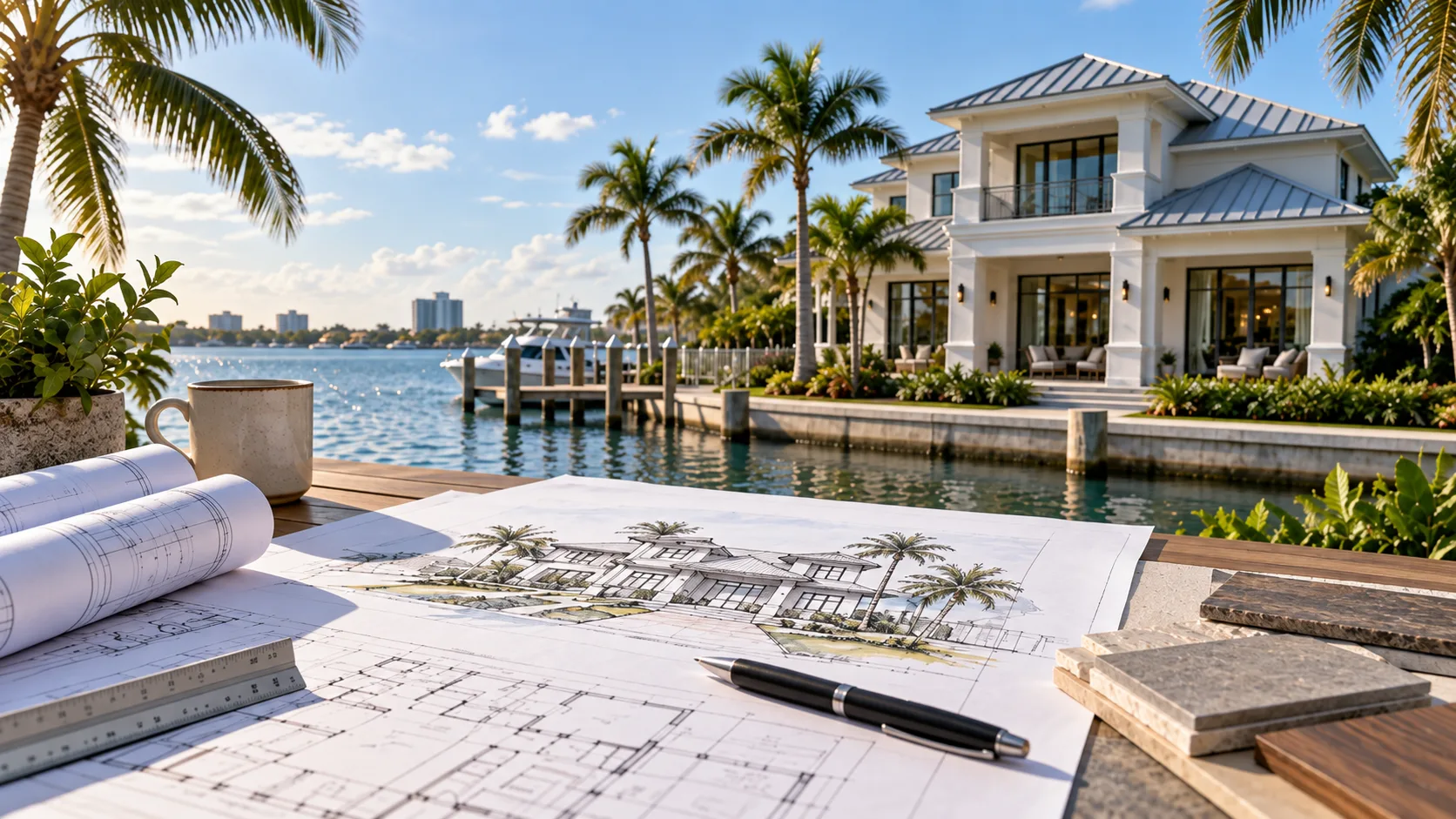
- Metal roofing (standing seam is the preferred residential application) is increasingly popular in coastal areas for its longevity, fire resistance, and compatibility with reflective "cool roof" finishes that meaningfully reduce solar heat gain. It's one of the stronger choices for energy performance in Florida's climate — our guide to designing for Florida's heat covers how roofing choices interact with overall energy strategy.
- Architectural asphalt shingles are common but perform less well over time under Florida's UV exposure, typically carrying shorter effective lifespans than tile or metal in this climate.
Whatever roofing material is selected, the underlayment beneath it is equally important. Florida Building Code requires specific underlayment assemblies for wind resistance and water-shedding — this is documented in the permit set and matters for both compliance and long-term performance when a storm tests the envelope.
Interior flooring
Florida's humidity fluctuations cause solid hardwood floors to expand and contract seasonally, resulting in gaps, cupping, and squeaking over time. Engineered hardwood handles Florida's conditions significantly better because its cross-ply construction resists dimensional change while maintaining the appearance of real wood. Solid hardwood isn't impossible in Florida, but it requires careful climate control and a home that's consistently occupied and conditioned.
Porcelain tile is the most forgiving choice for Florida's main living areas: it handles humidity, temperature swings, and cleaning products without complaint. Large-format tile (24×24 inches or larger) is popular in new construction because it reduces grout lines and maintenance. The trade-off is hardness underfoot — many homeowners use tile in kitchens, bathrooms, and main living areas while choosing engineered wood or luxury vinyl plank in bedrooms for comfort.
Luxury vinyl plank (LVP) has improved substantially in recent years. It's dimensionally stable, easy to maintain, genuinely waterproof, and increasingly convincing in appearance — a practical choice for high-traffic areas or spaces that see moisture.
The finishes and materials that hold their value longest in Florida are the ones chosen for the climate first and aesthetics second. A beautiful floor that buckles or a cabinet that swells in the humidity isn't a good finish — it's a future project.
Cabinetry: what matters in Florida's humidity
Moisture management is the critical factor for cabinetry performance in Tampa Bay. Cabinet boxes constructed from plywood hold up significantly better than particleboard in humid environments — particleboard absorbs moisture and swells or deteriorates, particularly in kitchens and bathrooms where humidity is highest. When specifying cabinets for any project, confirm plywood box construction and verify that interior surfaces are finished or sealed.
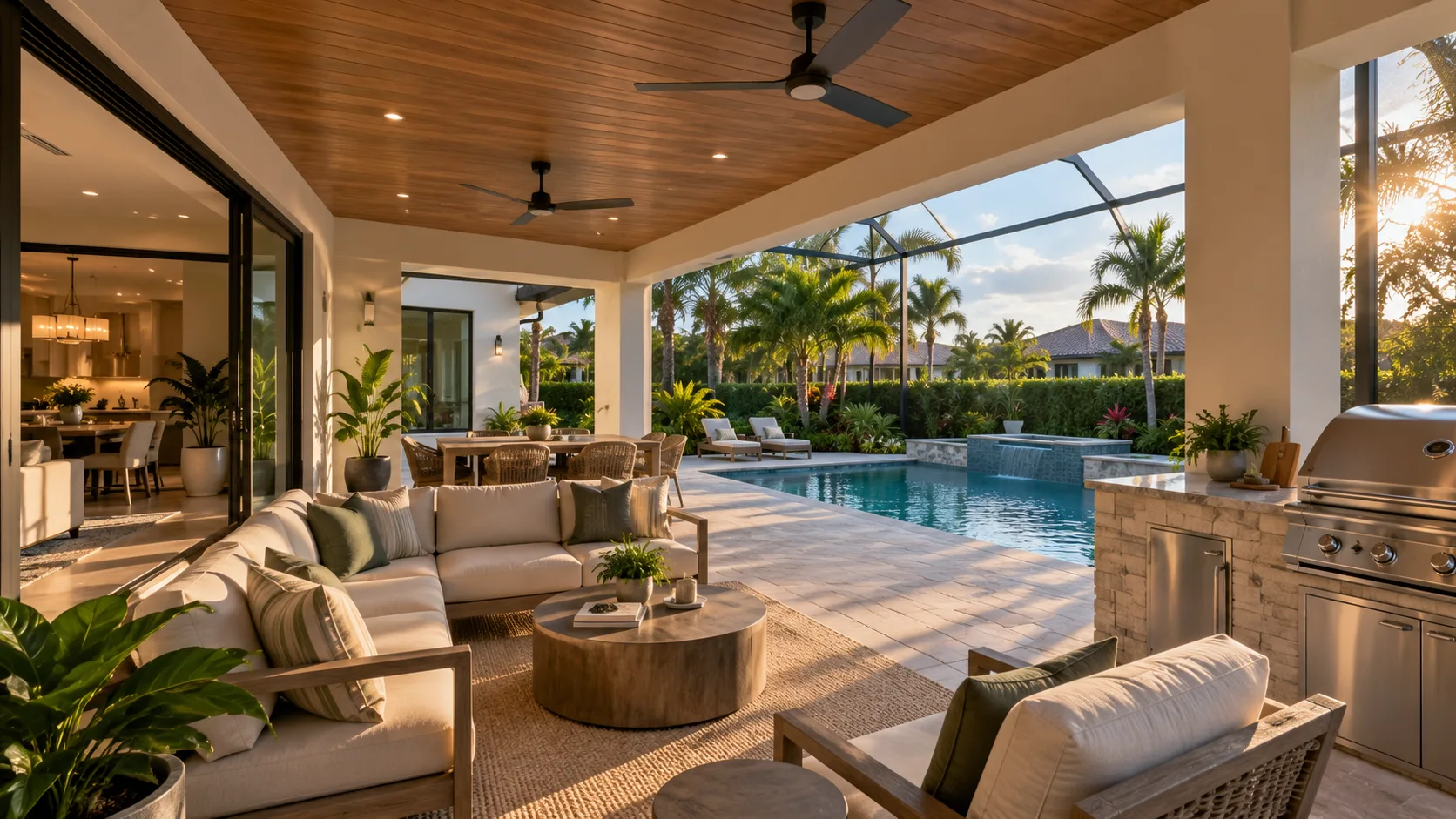
For outdoor cabinetry — summer kitchens, outdoor bars, and lanai built-ins — marine-grade polymer or stainless-steel construction is the right choice. Wood-based outdoor cabinets will fail quickly in Florida's outdoor conditions regardless of how they're finished. Our post on lanai and outdoor living design covers outdoor material selection in detail.
Hardware and fixtures in a coastal environment
Salt air accelerates corrosion on hardware, particularly within several miles of open water. This affects more homes in the Tampa Bay region than most homeowners realize — the area's geography means that even inland neighborhoods can be within the corrosion influence of Tampa Bay itself. Coastal-rated or marine-grade hardware — solid stainless steel, solid brass, or quality chrome-plated materials — outlasts basic hardware finishes significantly in this environment.
The detail applies to door hardware, window handles, cabinet pulls, hinge screws, exterior light fixtures, and plumbing fixtures in wet areas. It's consistently overlooked until a relatively new installation fails earlier than expected. Specifying coastal-rated hardware from the start costs marginally more and performs years longer.
Windows and doors: energy and storm performance together
Window and door selection in Florida is driven by two requirements that operate in tandem: energy performance and hurricane protection. Impact-rated glazing addresses both simultaneously — protecting the building envelope during a storm while also offering meaningful insulating and solar-control properties.
For energy performance, the Solar Heat Gain Coefficient (SHGC) is the most important number in Florida's climate. It controls how much solar heat enters the home through glass — far more relevant than the U-factor (insulating value) in a climate where cooling dominates. Our post on hurricane-resistant home design covers opening protection requirements in detail, including what the Florida Building Code specifies for the Tampa Bay design wind zone.
For new construction, impact-rated windows and doors are effectively standard throughout the region. For remodels that touch the building envelope, specifying compliant assemblies from the beginning of the design phase prevents cost surprises when the permit documents go to plan review.
Pulling it together: make material decisions during design, not after
The best time to make material and finish decisions is during the design phase — not during contractor pricing or, worse, mid-construction. Structural decisions (like whether the roof can carry tile) need to be reflected in the engineering. Energy decisions (like window SHGC) affect the energy calculations required for permitting. Outdoor material selections affect the architectural drawings for permits. Treating these as afterthoughts creates either redesign cycles or construction-phase surprises.
If you're building a new home or planning a remodel and want to work through these decisions with a designer who understands Florida's specific demands, schedule a free consultation. We've been designing homes for Tampa Bay families since 1986, and material performance in this climate is something we factor into every project from the first design conversation. Learn more about our custom home design service and remodel and addition design service to see how we approach the full scope of a project.